



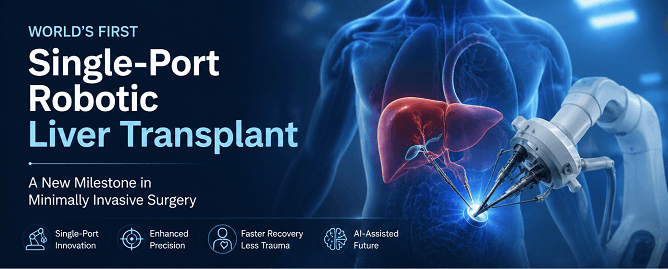
The World’s First Single-Port Robotic Living Donor Liver Transplant Has Been Completed
The field of transplant surgery has reached a new milestone with the successful completion of the world’s first Single-Port Robotic Liver Transplant, representing a major advancement in minimally invasive surgery.
This groundbreaking procedure combines robotic technology with complex transplant techniques to reduce surgical trauma while improving precision and control.
Unlike traditional open liver transplantation, which requires large abdominal incisions, the single-port robotic approach uses a robotic surgical system through a single access point. This innovation demonstrates how advanced surgical technologies are transforming the future of organ transplantation.
Why Is Single-Port Robotic Liver Transplantation a Breakthrough?
Liver transplantation is among the most challenging procedures in modern medicine. Surgeons must carefully manage complex anatomical structures, including blood vessels, bile ducts, and liver tissues, while ensuring the safety of both donors and recipients.
For decades, open surgery has remained the standard approach because of the technical difficulty of these operations. However, robotic surgical systems are now creating new possibilities for minimally invasive transplantation.
Enhanced Surgical Precision
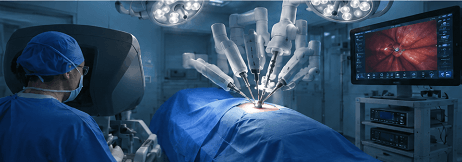
Robotic surgery provides surgeons with high-definition 3D visualization and advanced instrument control.
Compared with conventional laparoscopic instruments, robotic tools offer greater flexibility and movement accuracy, helping surgeons perform delicate procedures in confined anatomical areas.
For complex operations such as liver transplantation, improved precision may contribute to better surgical control and improved patient outcomes.
Reduced Surgical Trauma and Faster Recovery
One of the key advantages of a single-port robotic liver transplant is the potential reduction in surgical trauma.
By using a smaller access point instead of large open incisions, robotic-assisted procedures may provide benefits such as:
- Less postoperative pain
- Smaller surgical scars
- Faster recovery
- Reduced impact on surrounding tissues
This advantage is especially meaningful for living donors, who undergo major surgery despite being otherwise healthy.
How Robotic Technology Is Reshaping the Operating Room
The development of robotic liver transplantation reflects a broader transformation in modern surgery.
Today’s robotic surgical systems are evolving beyond mechanical assistance and increasingly integrating advanced technologies such as artificial intelligence, real-time imaging, and surgical data analysis.
AI-Assisted Surgery and Intelligent Surgical Systems
Artificial intelligence is becoming an important part of the next generation of surgical innovation.
AI-assisted technologies may help surgeons by:
- Identifying anatomical structures
- Supporting surgical planning
- Providing real-time information during procedures
- Analyzing surgical performance data
Although AI does not replace surgeons, it can enhance decision-making and improve surgical efficiency.
The Future of Minimally Invasive Transplant Surgery
The success of the first single-port robotic liver transplant represents an important step toward expanding minimally invasive techniques into more complex medical fields.
Future development will depend on:
- Long-term clinical validation
- Wider access to robotic surgical platforms
- Specialized surgeon training
- Integration of intelligent technologies
As these technologies continue to mature, robotic surgery may become increasingly valuable in transplantation, oncology, cardiovascular surgery, and other complex procedures.
A New Era of Precision Surgery
The completion of the world’s first single-port robotic liver transplant highlights the rapid evolution of modern surgery toward greater precision, intelligence, and minimally invasive care.
By combining robotic surgical systems, advanced imaging, and artificial intelligence, healthcare is moving toward a future where complex procedures can be performed with improved accuracy and reduced patient burden.
The operating room of the future will not simply rely on automation. Instead, it will become a highly connected environment where surgeons and intelligent technologies work together to deliver safer and more personalized patient care.