


In traditional medicine, treating neurological disorders usually means long-term medication or surgery. However, a new chapter officially began on May 8, 2026. Cala Health received the 2026 MedTech Breakthrough Award for its innovative Cala kIQ® System.
Indeed, this recognition is more than just a trophy. It marks the arrival of Bioelectronic Medicine as a mature alternative to traditional pharmacology. Specifically, this technology offers a home-based solution that patients can manage themselves.
Cracking the Brain’s “Noise”
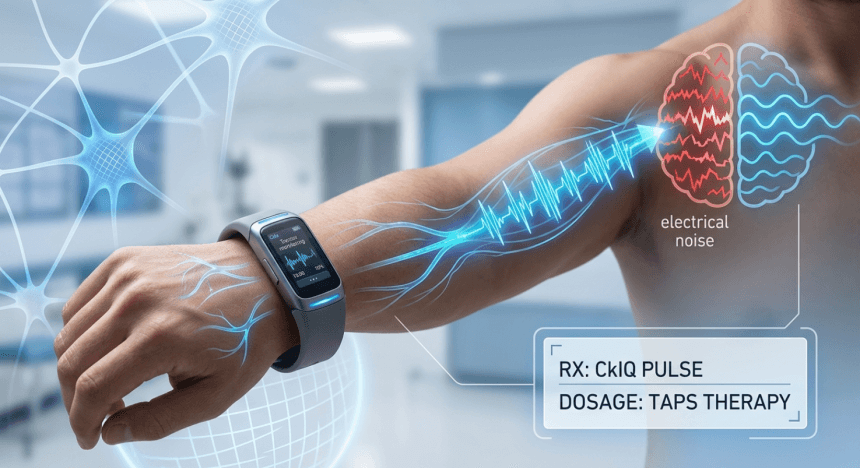
To understand the significance of the Cala kIQ®, we must first look at how tremors work. Whether caused by Essential Tremor (ET) or Parkinson’s Disease (PD), a tremor is essentially “electrical noise” in the brain. Furthermore, this noise disrupts the signals that control smooth movement.
How TAPS Therapy Works
Unlike pills that affect the whole body, the Cala kIQ® uses TAPS (Transcutaneous Afferent Patterned Stimulation). First, the wrist-worn device sends calibrated electrical pulses directly to the nerves.
Next, these signals travel to the brain to create a “noise-cancelling” effect. They act like specialized headphones for your nervous system to neutralize tremors. Additionally, the kIQ system uses integrated AI. Consequently, it measures your unique tremor in real-time and adjusts the pulse automatically.
Strategic Insights for the MedTech Industry
For professionals in the MedTech space, this success offers three key lessons:
- Patient-Centric Design: The Cala kIQ® does not look like a cold clinical instrument. Instead, it looks like a premium wearable that patients actually want to wear.
- Filling the “Therapeutic Gap”: There is a massive gap between early medication and invasive surgery. Therefore, the kIQ system captures a vital “middle path” for underserved patients.
- Medicine as a Continuous Service: The kIQ is not just a hardware sale. Because it tracks tremor data over time, it provides doctors with long-term insights. This shifts the business model from selling a product to managing a life-long condition.
Conclusion: A New Kind of Prescription
The story of the Cala kIQ® reminds us that innovation comes from understanding the body’s electrical language. For instance, clinical studies show that 75% of patients experience significant tremor reduction after one session.
In the future, your prescription might not come in a bottle. Instead, it will come in a pulse. For more updates on neurological breakthroughs, stay tuned to Mediscope.