



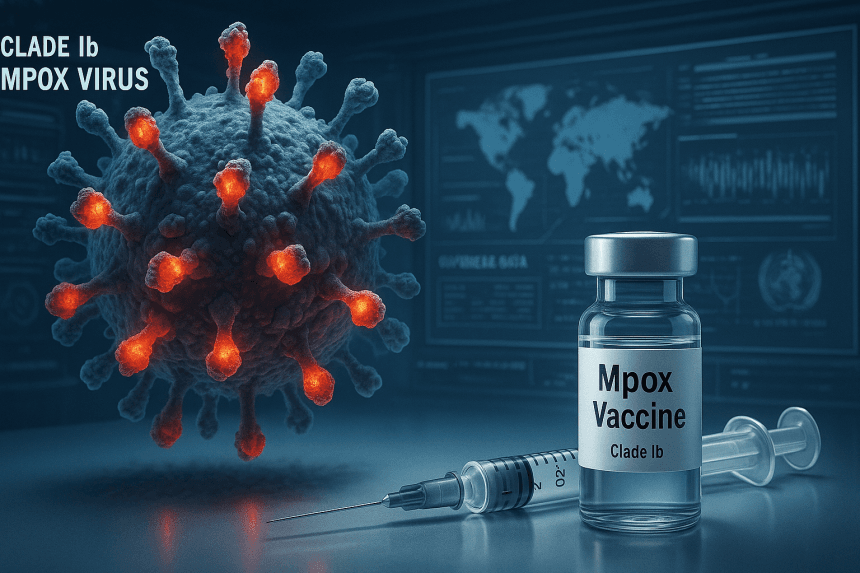
The Mpox outbreak caused by Central Africa’s new Clade Ib variant has triggered a WHO global health alert. This highly contagious strain is spreading rapidly across continents, challenging current vaccine efforts and healthcare systems worldwide. Health authorities emphasize urgent surveillance and enhanced preventive measures to contain the virus and protect public health.
Background
The Mpox virus, initially dubbed monkeypox, is an orthopoxvirus closely related to the variola virus, responsible for smallpox. Historically, the disease was largely confined to certain regions in Central and West Africa, with sporadic cases outside the endemic zones often traced back to international travel or imported animals. However, the current outbreak featuring the new clade Ib variant has starkly deviated from previously observed patterns.
First identified in the Democratic Republic of Congo earlier this year, Clade Ib has since crossed borders, evading containment efforts. The swift international spread has renewed scrutiny on public health policies, vaccine distribution, and international cooperation frameworks designed to mitigate infectious disease threats.
Details & Key Facts
Research conducted by the Congolese National Institute of Biomedical Research, in collaboration with the U.S. Centers for Disease Control and Prevention (CDC), underscores the troubling characteristics of Clade Ib. Preliminary genetic sequencing suggests mutations that may enhance the virus’s ability to infect human hosts, with an estimated reproduction number (R0) notably higher than previous variants.
Statistics are equally alarming. As of the latest WHO update, over 20,000 confirmed cases of the Clade Ib variant have been reported in more than 30 countries. The epicenter remains Central Africa, but significant clusters have been identified in Europe, Asia, and North America. The case fatality rate stands at approximately 3.5%, a slight increase from past figures, further indicating the variant’s potential severity.
Industry or Clinical Impact
The healthcare industry faces urgent challenges in response to the Clade Ib outbreak. Vaccine deployment, which had waned following a decrease in Mpox cases globally, must now be rapidly scaled up. The WHO has called for renewed focus on the Mpox vaccine, emphasizing the need for a multi-pronged approach that includes both vaccination and therapeutic interventions.
Moreover, healthcare professionals are advised to be vigilant for symptoms that, while similar to those of previous Mpox cases, may manifest more aggressively due to the novel variant. The CDC has updated clinical guidelines, urging practitioners to prioritize rapid diagnosis and isolation of suspected cases to prevent further spread.
Pharmaceutical companies are also under pressure to fast-track research and development of targeted antivirals and next-generation vaccines. Dr. Sarah Valdez, an infectious disease specialist at Johns Hopkins University, notes, “The medical community must adapt swiftly; understanding the molecular basis of Clade Ib’s aggressiveness is crucial for developing effective countermeasures.”
Conclusion
As the Clade Ib Mpox variant continues to challenge global health systems, the threat underscores the necessity for robust surveillance networks and a coordinated international response. The WHO and national health agencies advocate for enhanced genomic monitoring and increased funding for vaccine and therapeutic research.
Looking ahead, experts stress the importance of leveraging technological advancements and fostering international collaboration to manage this outbreak and future ones. The resurgence of Mpox serves as a stark reminder that global health security hinges on preparedness, innovation, and cooperation across borders.
The coming weeks and months are critical as the world mobilizes resources to address this burgeoning public health crisis. While the path forward is fraught with challenges, the collective response will determine the trajectory of this outbreak and future resilience against zoonotic diseases.