



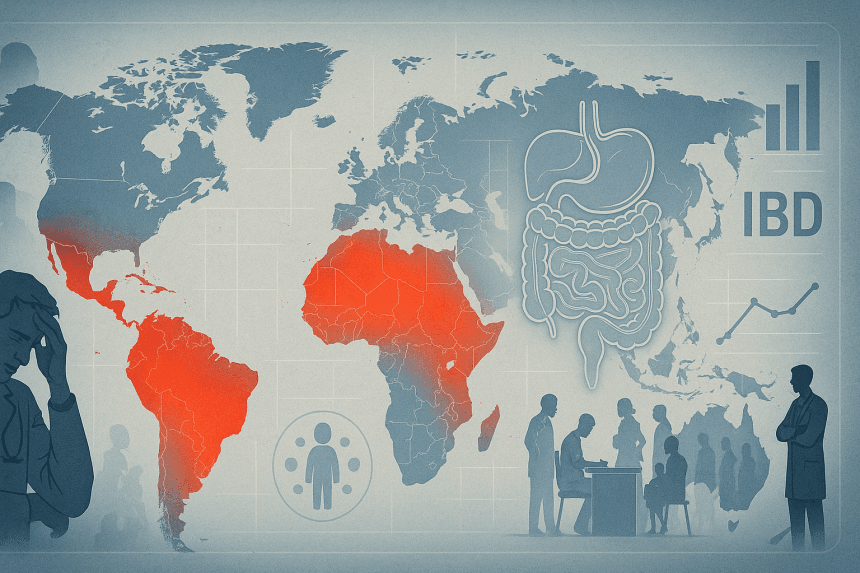
In an alarming healthcare trend, inflammatory bowel disease (IBD), traditionally seen as a condition plaguing Western nations, is witnessing a significant rise across developing countries. This surge is presenting new challenges to healthcare systems already grappling with a myriad of other infectious and chronic diseases, according to recent data published in The Lancet Gastroenterology & Hepatology.
Once rare in regions such as Asia, the Middle East, and parts of Africa, IBDs like Crohn’s disease and ulcerative colitis now threaten to strain healthcare resources in these areas. Researchers and healthcare experts are racing to understand and combat this public health issue before it spirals out of control.
Background
Inflammatory bowel disease encompasses chronic conditions characterized by inflammation in the digestive tract, leading to symptoms such as abdominal pain, severe diarrhea, fatigue, and weight loss. Traditionally, the incidence of IBD has been highest in Western countries—a factor often attributed to dietary habits, lifestyle, and genetic predispositions. However, recent studies have highlighted a troubling shift, with incidences in developing nations climbing steadily over the past two decades.
The burgeoning prevalence can be linked to rapid urbanization, dietary westernization, and improvement in sanitation, which paradoxically, may increase the risk as these nations transition from infections to lifestyle-related diseases. The so-called “hygiene hypothesis” suggests that reduced microbial exposure in childhood, due to improved sanitation, may lead to an increased risk of autoimmune diseases, including IBD.
Details & Key Facts
Recent research spearheaded by the International Organization for the Study of Inflammatory Bowel Diseases (IOIBD) has shown startling statistics. For example, in South Asia, the incidence rates of IBD are now comparable to those of Western countries. In India alone, there are now an estimated 1.4 million cases of IBD, according to the Asia-Pacific Crohn’s and Colitis Epidemiology Study (ACCESS).
Additionally, a recent commentary in the Journal of Crohn’s and Colitis highlights that urban areas in Africa and Latin America are beginning to report new cases at rates rivaling those in Europe and North America. Dr. Maria Abreu, President of the IOIBD, remarked, “The rise of IBD in these regions is likely multifactorial, influenced by urban lifestyle choices, dietary shifts towards processed foods, and possibly genetic susceptibilities that are now being unmasked due to environmental changes.”
Industry or Clinical Impact
The surge in IBD cases brings forth significant ramifications for global healthcare systems. Due to the chronic nature of IBD, patients require lifelong management, which includes costly medications, regular monitoring, and sometimes surgical interventions. Many developing nations may find their healthcare budgets stretched thin trying to cope with the demands of providing appropriate treatment for IBD patients alongside other public health priorities such as infectious diseases.
Pharmaceutical companies see an expanding market for biologics and other advanced therapies designed to manage IBD effectively. However, accessibility remains a significant concern, as these treatments often come with a high price tag that is out of reach for the average patient in developing regions.
The healthcare industry must invest in building awareness and training healthcare professionals in these regions to diagnose and manage IBD effectively. Telemedicine has emerged as a key player in providing expert consultations to remote areas, ensuring that patients receive timely and accurate treatment strategies.
Conclusion
The rising incidence of IBD in developing nations serves as a poignant reminder of the dynamic nature of global health challenges. As healthcare systems adapt to this new reality, it becomes imperative to foster international collaboration, advance outreach programs, and ensure equitable access to therapies globally. Future research should focus on understanding the complex interplay of genetic, environmental, and lifestyle factors driving this surge.
In the coming years, it is crucial for global health organizations, pharmaceutical leaders, and local governments to address this issue collaboratively. The development and implementation of tailored public health strategies can help mitigate the impact of IBD and bolster the resilience of healthcare systems worldwide. As healthcare stakeholders mobilize against this growing challenge, the learnings and infrastructures established may ultimately serve to combat other emerging health crises, offering hope in the face of uncertainty.