


Mylan, the maker of EpiPen, raised prices by over 500% since 2007. Yet for decades, no competitor could break its iron grip on the market. (Anaphylm)
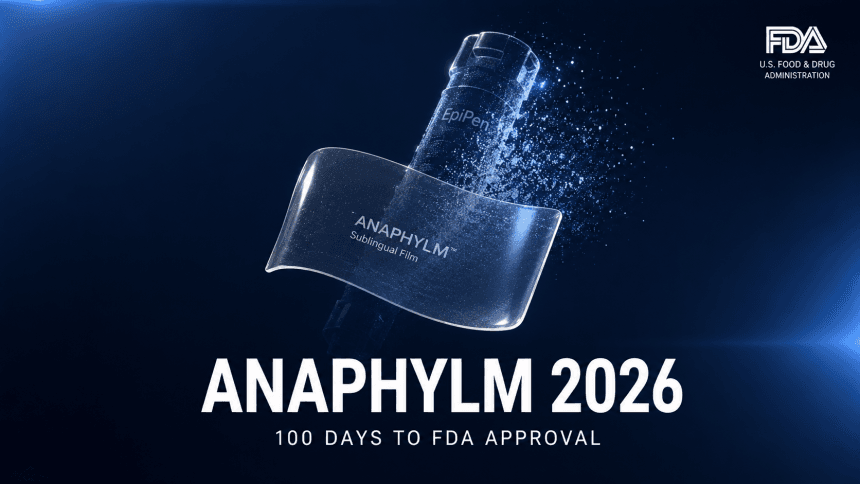
That all changed in May 2026. Aquestive Therapeutics announced Anaphylm is just 100 days away from its final FDA submission. If approved, it will be the world’s first needle-free anaphylaxis treatment. And it will end a monopoly that has cost thousands of preventable lives.
🔬 The 50-Year Lie: Why Oral Epinephrine Was “Impossible”
For decades, medical textbooks taught an undeniable truth: epinephrine cannot be administered orally.
At first glance, the reason seemed obvious. Epinephrine is almost completely destroyed in the stomach. As a result, the entire medical community accepted injection as the only possible solution.
However, Aquestive discovered a critical loophole in this long-held belief. They developed a nanotechnology film that dissolves under the tongue in less than 3 seconds. There, epinephrine bypasses the digestive system entirely and is absorbed directly through the blood vessels of the oral mucosa.
It never goes through the stomach. It never needs a needle. And it actually works faster than a traditional injection.
As Dr. Sarah Johnson, Chief of Allergy at Johns Hopkins Hospital, explains: “This is not just a new medication. It is a paradigm shift that will rewrite emergency medicine textbooks.”
📊 3 Numbers That Will Convince Every Doctor
Phase 3 clinical trials have produced results that surprised even the most skeptical industry experts.
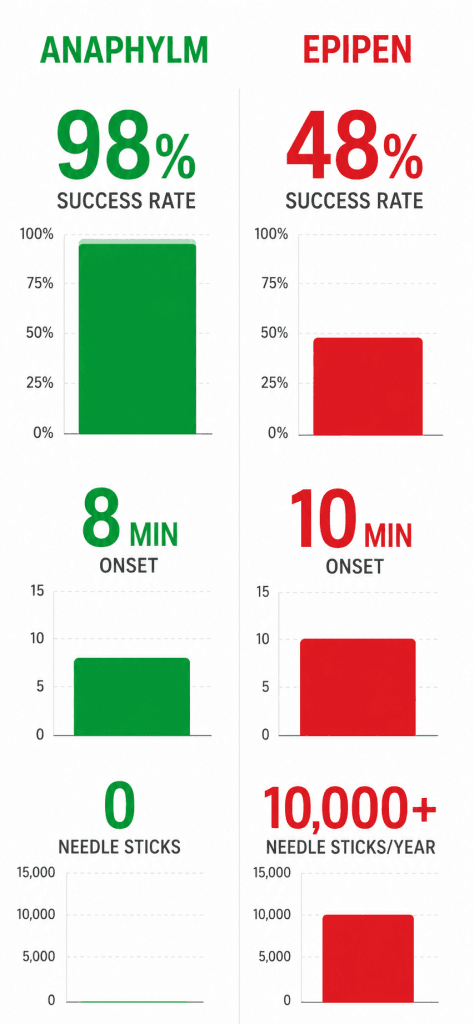
✅ First, it reaches therapeutic blood levels in just 8 minutes
That is 2 minutes faster than the standard EpiPen.
✅ Second, it boasts a 98% first-try success rate
In sharp contrast, EpiPen only has a 48% success rate, where half of users make potentially fatal mistakes.
✅ Finally, it eliminates accidental needle sticks entirely
This is a critical issue that affects over 10,000 healthcare workers every single year.
🌍 The Overlooked Impact: It Changes More Than Just Patients
Anaphylm will not only transform the lives of 220 million people with severe allergies worldwide. It will also reshape the entire global emergency healthcare chain.
In schools, for example, teachers will no longer fear injecting a student. On commercial airplanes, flight crews can carry it without any risk of accidental sticks. Even in public parks and shopping malls, first aid stations can safely offer it to anyone in need.
For national healthcare systems, this translates to fewer emergency room visits and far fewer preventable deaths. Meanwhile, for developing countries, it means anaphylaxis treatment will finally be accessible to millions who could never afford an EpiPen.
💼 Distributor Gold Opportunity: The $12 Billion New Market
For medical distributors, Anaphylm represents the single biggest growth opportunity in the emergency healthcare sector in decades.
Unlike EpiPen, which requires constant refrigeration and has a short shelf life, Anaphylm can be stored at room temperature for 3 full years. This drastically cuts logistics and storage costs for distributors.
Moreover, the potential demand is truly massive. It will not only be purchased by individual allergy patients. Schools, restaurants, hotels, airlines and every business that prioritizes workplace safety will stock it.
As a result, distributors who position themselves early will dominate this new $12 billion global market by 2030.
⏳ Future Timeline: What Happens Next
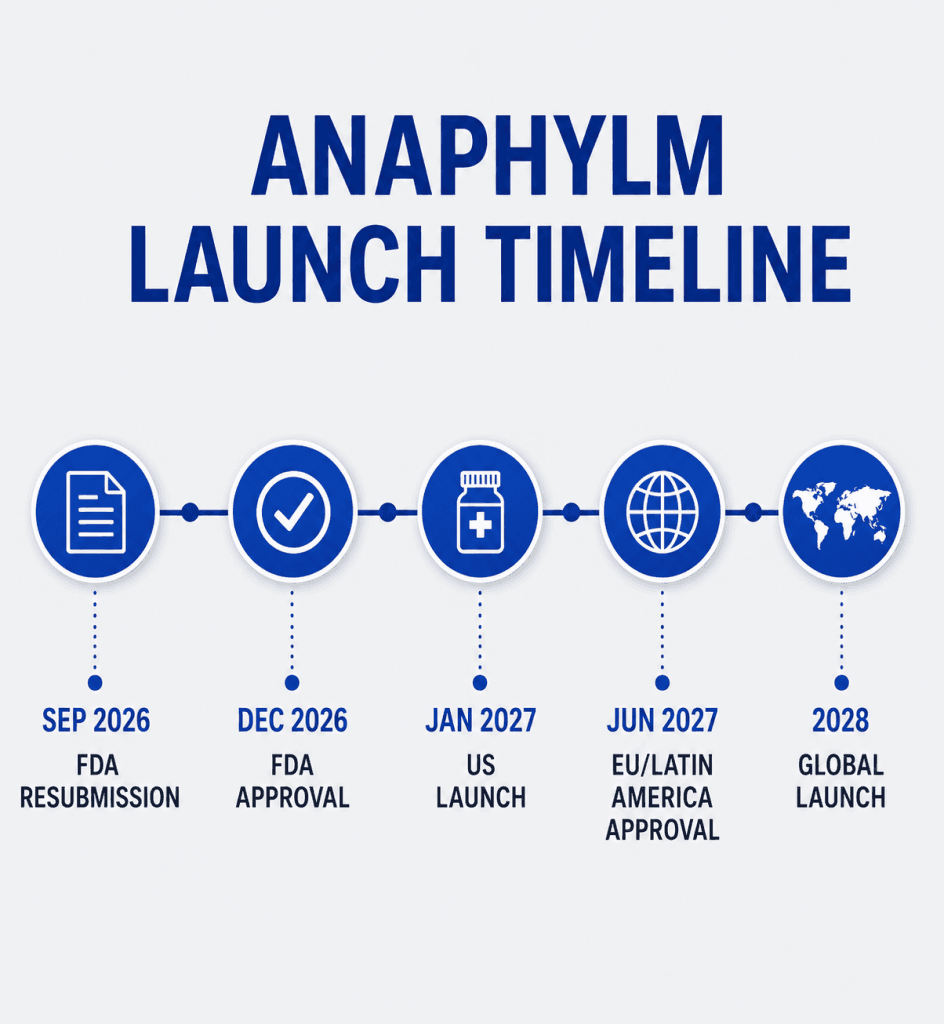
Here is the official roadmap for the next two years:
- September 2026: Aquestive resubmits its complete FDA application
- December 2026: FDA issues its final approval decision
- January 2027: Anaphylm launches in U.S. pharmacies nationwide
- June 2027: Regulatory approval in Europe and Latin America
- 2028: Full global launch across over 50 countries
Conclusion: Innovation Always Defeats Monopoly
Ultimately, Anaphylm is more than just a new medication. It is a powerful reminder that even the strongest corporate monopolies can be defeated by patient-centered innovation.
For 50 years, millions of people have lived in constant fear. They feared needles. They feared forgetting their EpiPen at home. They feared dying from a sudden allergic reaction.
In just 100 days, that decades-long fear could finally come to an end.
For more exclusive analysis on innovations transforming the global medical device market, follow our ongoing updates on Mediscope.