


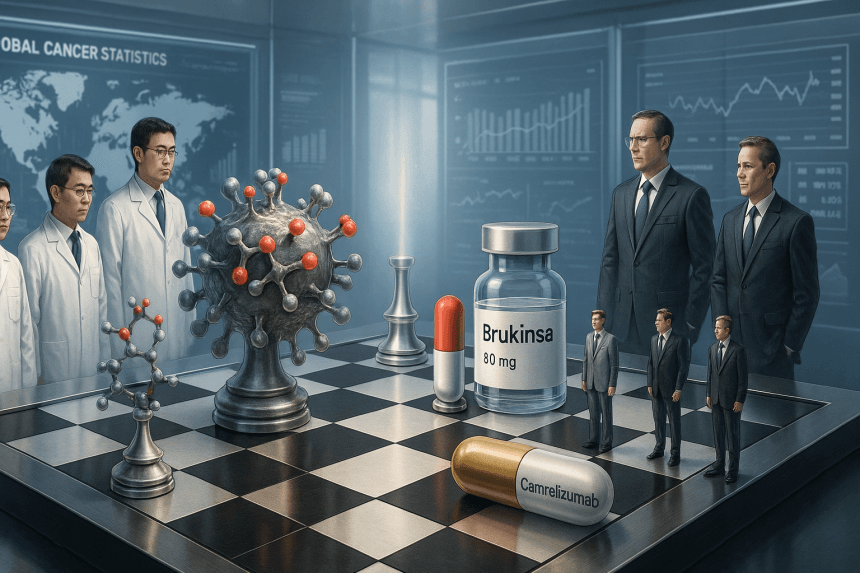
In a groundbreaking shift set to stir the global pharmaceutical landscape, Chinese pharmaceutical firms are rapidly emerging as formidable rivals to Western giants, particularly in the oncology sector. This recent wave of innovation is not only attracting the attention of health professionals worldwide but is also making significant ripples on Wall Street.
Background
Historically, China has been seen primarily as a manufacturing hub for generic drugs. However, in recent years, fueled by significant government investment and favorable policy initiatives, Chinese drugmakers have pivoted towards innovation, particularly in cancer treatment. These firms are leveraging cutting-edge research and development to create novel therapeutics that are groundbreaking both in efficacy and affordability. Pharmaceutical exports from China, especially in oncology, are now a burgeoning sector, leading many to compare this scientific leap to the country’s previous technological advances in sectors like telecommunications.
Details & Key Facts
One of the key players in this revolution is BeiGene, a Beijing-based biotech company that has introduced Brukinsa (zanubrutinib), a Bruton’s tyrosine kinase (BTK) inhibitor. Approved by the U.S. Food and Drug Administration (FDA) for the treatment of mantle cell lymphoma (MCL), Brukinsa has shown superior efficacy compared to its Western counterparts in clinical trials. Another standout is Innovent Biologics, whose PD-1 inhibitor, Tyvyt (sintilimab), has joined forces with Eli Lilly to make inroads in the competitive U.S. market.
According to a report from IQVIA, China now stands as the second-largest pharmaceutical market globally, with a projected growth rate of 8-11% annually through 2023. This rapid expansion is largely driven by oncology drugs, accounting for a significant portion of the market’s total volume and value. The rise of Chinese cancer drugs is further underscored by robust clinical data. For instance, a phase III trial of Tyvyt demonstrated a median overall survival rate of 8.2 months in certain cancer patients compared to just 5.3 months for those treated with existing Western standards.
Industry or Clinical Impact
The emergence of Chinese cancer drugs is poised to redefine the oncology drug market landscape, offering new hope for patients and potentially reducing treatment costs globally. With the U.S. healthcare system facing incessant debates over drug pricing, the introduction of cost-effective Chinese options could be a game-changer. Moreover, the strategic partnerships between Chinese firms and established Western companies, such as the collaboration between Innovent Biologics and Eli Lilly, indicate a win-win situation where innovation and market access enhance global health outcomes.
Furthermore, the integration of Chinese cancer drugs into clinical practice is gaining momentum, backed by promising clinical trial results and regulatory approvals. “The advancements made by Chinese pharmaceutical companies are nothing short of transformative,” says Dr. Mei Zhang, an oncology researcher at the University of California, San Diego. “They have not only raised the bar in terms of clinical efficacy but also offer a more sustainable model for drug pricing in the future.”
This competitive scenario could drive Big Pharma to innovate more aggressively, focusing on value-based care and partnerships that bridge traditional medical frontiers. Meanwhile, regulators in the U.S. and Europe might face mounting pressure to expedite the approval processes of these innovative treatments without compromising safety and efficacy standards.
Conclusion
The ascension of Chinese cancer drugs from a regional success story to a global phenomenon marks a significant shift in the pharmaceutical sector, challenging long-standing market dynamics. As more Chinese biotech firms make their mark with FDA-approved drugs that rival Western medicines, the traditional dominance of Big Pharma is being re-evaluated. While questions persist about intellectual property rights and regulatory hurdles, the overriding narrative is one of optimism and potential.
As we look to the future, the spotlight remains on sustaining this momentum while ensuring equitable access to these life-saving therapies worldwide. For patients, healthcare providers, and industry stakeholders, the rise of Chinese cancer drugs represents not just a competitive shift, but a promising new chapter in the ongoing fight against cancer.