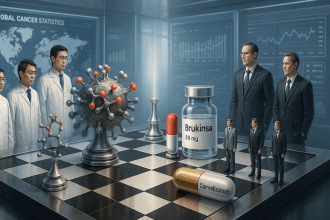



Innovative strides in cancer treatment are on the horizon as biopharmaceutical companies refine their focus on a previously elusive enemy: ‘cold tumors.’ Traditionally resistant to the immune system’s assault, these tumors have posed a formidable challenge in oncology. However, recent advances in the field are now targeting these cancers with newfound precision, promising to expand therapeutic options for patients who had limited recourse.
In the realm of cancer treatment, tumors are often differentiated by how ‘hot’ or ‘cold’ they are. ‘Hot tumors’ are characterized by their immunogenicity, or the ability to trigger an immune response, and have hence responded more favorably to immunotherapies. ‘Cold tumors,’ however, evade immune detection and have notoriously been resistant to such treatments, necessitating a paradigm shift in therapeutic strategies.
As biopharmaceutical innovation accelerates, companies are developing new treatments that aim to convert cold tumors into more immune-active profiles. This includes the use of novel agents that can modify the tumor microenvironment and enhance immune system recognition. These approaches are being propelled by a foundation of recent discoveries in cancer immunology and genetic profiling.
Underpinning these efforts is the work of scientists who have illuminated the molecular mechanisms that render tumors ‘cold.’ Research has increasingly aimed to demystify how certain tumors conceal themselves from the immune system. A landmark study by researchers at the Dana-Farber Cancer Institute and the Broad Institute provided pivotal insights, illustrating the specific genetic mutations and signaling pathways that contribute to immune exclusion.
Key breakthroughs from these studies indicate that targeted manipulation of the tumor microenvironment could make previously inaccessible tumors susceptible to existing immunotherapies. For instance, altering specific cytokine profiles within the tumor milieu or addressing stromal cells that suppress immune function could help ‘wake up’ the immune system to the presence of cancer cells.
One of the promising therapies emerging from these developments is a class of drugs known as STING (Stimulator of Interferon Genes) agonists. These agents activate innate immune responses within the tumor environment, essentially marking the cancer as a target for the immune system. Early-phase clinical trials have demonstrated that STING agonists can indeed modulate the immune landscape of traditionally resistant cancers, offering a potent combinational strategy with established therapies such as checkpoint inhibitors.
The industry impact of successfully targeting cold tumors is potentially transformative. Estimates suggest that up to 50% of cancers can be classified as ‘cold,’ including notoriously difficult-to-treat types like pancreatic and ovarian cancer. A shift from reactive to proactive treatment of these tumors could substantially improve survival rates and patient outcomes, reducing the burden on healthcare systems worldwide.
Moreover, the clinical implications extend to personalized medicine, as genetic profiling and biomarker identification become central to the application of these new therapies. Oncologists would be able to tailor treatment plans more precisely to the genetic makeup of an individual’s tumor, thereby optimizing the therapeutic response and minimizing adverse effects.
Looking to the future, several promising partnerships between biotechnology firms and major pharmaceutical companies signal a strong commitment to advancing these strategies. Notably, collaborations such as those between Merck, AstraZeneca, and multiple biotech startups underscore a growing recognition that the challenge of cold tumors requires a multifaceted approach.
The journey to effectively target cold tumors is still in its nascent stages, with much of the current research residing in preclinical or early clinical phases. However, the momentum is building, reinforced by increasing financial investments and a burgeoning understanding of tumor immunobiology. For patients and healthcare providers alike, these advances herald a hopeful new chapter in the fight against cancer, pushing the boundaries of what was once deemed untargetable.
In summary, the fight against cold tumors exemplifies the convergence of innovative science and clinical ambition. As research continues to unfold, the medical community waits in eager anticipation of how these nascent therapies will redefine cancer care, offering hope to those who need it most.